

Russell & Celtics802 words
What the box score never recorded
Russell's career line has no blocks, no steals and no split between offensive and defensive rebounds. The league simply was not writing those columns down yet — and every modern rate statistic quietly guesses at them.
What is in this piece — 5 sections
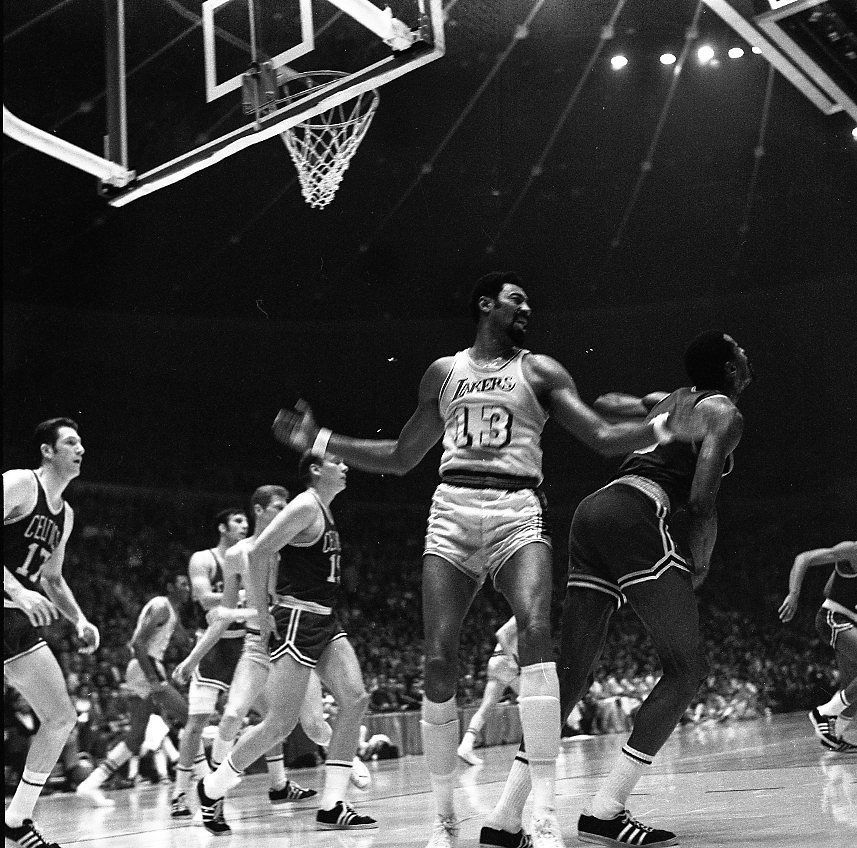
Open any modern player page and the box score columns look permanent: points, rebounds split into offensive and defensive, assists, steals, blocks, turnovers. They are not permanent. They were added one at a time, decades apart, and the dates matter more than almost any argument about who was the better defender.
Bill Russell played from 1956-57 to 1968-69. In that window the league recorded rebounds — but only as one number. It did not record blocked shots. It did not record steals. It did not record individual turnovers. So the honest answer to “how many shots did Russell block?” is not a number. It is a sentence: nobody was writing it down.
The dates, in order
Three of them do all the work.
- 1950-51 — total rebounds become an official NBA statistic. Russell's entire career sits after this line, which is why his rebound totals exist at all.
- 1973-74 — the league begins recording offensive and defensive rebounds separately, and in the same season begins recording blocked shots and steals. Russell had been retired for four years.
- Later still — individual turnovers join the box score, which is why turnover rate cannot be computed for anyone who played in the 1960s.
Look at the league leaderboards for blocked shots or offensive rebounds and you can see the seam without reading a word of commentary: the tables simply begin in 1973-74. There is no 1965 row to be missing, because there was never a 1965 row.
Why this breaks the statistics people quote
Almost every rate statistic in modern basketball analysis is a fraction, and the denominators come from columns Russell's era did not have.
Rebound percentage is the clearest case. It asks what share of available rebounds a player took, which requires knowing how many offensive and defensive rebounds his team and his opponent collected while he was on the floor. For the 1960s, two of those four inputs do not exist. Any rebound percentage you see attached to Russell's name has been reconstructed from team totals and estimated minutes — a defensible estimate, but an estimate, and one that should carry the word.
Block rate is worse: it is a fraction with an empty numerator. Defensive win shares, defensive rating and every “rim protection” metric that leans on blocks are, for Russell, built on inference from team scoring allowed rather than on anything he was observed doing.
What the era did record, and recorded well
This is not an argument that nothing is known. Minutes played, field goal attempts, free throws, total rebounds, assists, team points allowed and the final score were all kept, game by game, and they support a great deal. Russell's teams allowed fewer points than their opponents scored against anyone else, season after season, in a league where pace was far higher than it is now and shooting percentages were far lower — which means more missed shots per game, more loose balls, and rebound totals that look inflated to a reader used to 2026 numbers until the pace is taken into account.
That last point is the one worth keeping. A 20-rebound night in 1962 and a 20-rebound night today are not the same event, because the number of missed shots available to be rebounded was not the same. Comparing the raw totals across eras is the error; comparing them to the league that produced them is the fix, and the league columns needed to do that do exist.
How to check any era statistic yourself
Three questions settle it in under a minute.
- Did the column exist? Open the league's single-season leaderboard for that statistic and look at the earliest row. If the table starts in 1973-74, the statistic was not recorded before then — full stop.
- Is the number a fraction? If so, name all of its inputs and check each one against the answer above. One missing input makes the whole figure an estimate.
- Does the source say “estimated”? Reference sites are usually honest about this in their glossaries. The estimate is not the problem. Presenting it as a count is.
We apply the same test to ourselves. Elsewhere on this site the project's own pages describe Russell's record in the words the record supports — see the project's account of his career and the memorial on City Hall Plaza — and where a number would need a column that did not exist, there is no number.
More on how the eleven championships were actually won, bracket by bracket, in our piece on the playoff formats of that era; the rest of this desk is on Russell & Celtics, and everything on the site is indexed in the archive.
What we read
Every figure above comes from one of these documents. If a number is not in them, it is not in this piece.