

Russell & Celtics672 words
Eleven titles against the brackets that produced them
From 1955 to 1966 the team that won its division sat out the first round. Reading eleven rings without reading the bracket turns a structural fact into an argument.
What is in this piece — 5 sections
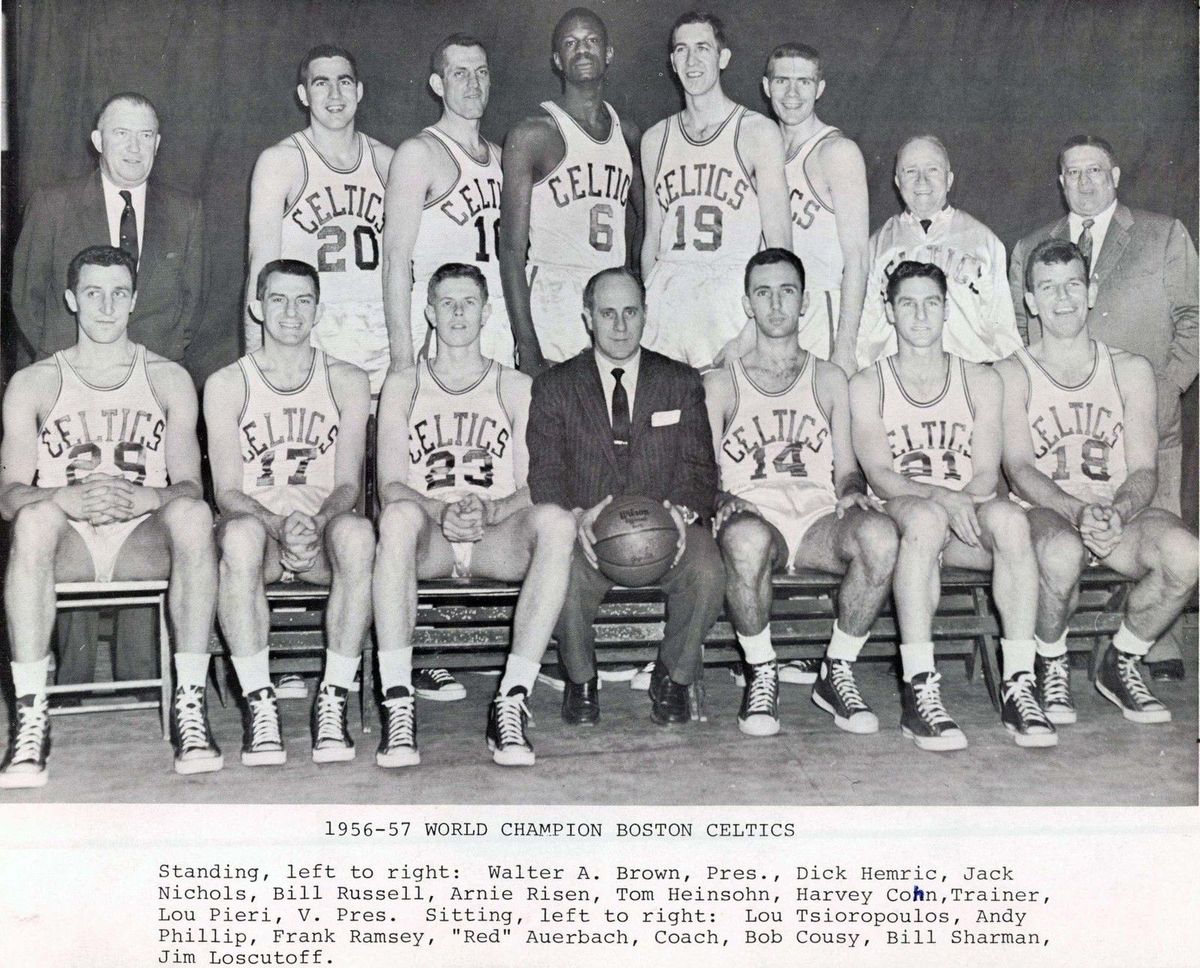
Eleven championships in thirteen seasons is the headline number of Bill Russell's career, and it is accurate. It is also the number most often used without the bracket that produced it, which is a shame, because the bracket is more interesting than the argument it usually starts.
The format, stated plainly
From 1955 through 1966, the first-place team in each division did not play in the first round of the NBA playoffs at all. It was idle while the division's second- and third-place teams played each other — a best-of-three series, expanded to best-of-five from 1961 — and the winner came up to face the rested division champion in the division finals. Division finals went to best-of-seven in 1958. The 1966 postseason was the last one run this way; from 1967 the league played an eight-team tournament with no byes.
Russell's Celtics were the first-place team in the East over and over through those years. Which means that for much of his career, winning a championship meant winning two series, not four.
Two rounds against four
The cleanest way to see the difference is to count the series a champion had to win, not the games.
| Era | Rounds for a division winner | Shape of the bracket |
|---|---|---|
| 1955-1966 | Two | Bye, then division finals, then the NBA Finals |
| 1967 onward | Three, then four | No byes; the field widens through the 1970s and 1980s |
| Today | Four | Four best-of-seven rounds, sixteen wins |
None of this makes the eleven smaller. A bye is earned by finishing first across a whole regular season, and the Celtics earned it by winning their division year after year — that is a harder thing than a short series, not an easier one. But it does mean that “eleven titles in thirteen years” and “eleven titles in thirteen years under the modern bracket” are different claims, and only the first one is true.
The season that breaks the pattern
1968-69, Russell's last, is the one to keep. Boston did not win its division that year; the Celtics finished fourth in the East and went into the playoffs without a bye and without home advantage. They won the championship anyway, with Russell as player-coach. It is the single season in his career where the bracket gave him nothing and the eleventh ring arrived by the long road — which is why it is the season to cite when someone argues the format did all the work.
How to read an era record without being fooled
- Count the rounds, not the rings. Published playoff brackets for each year state who received a bye and how long each series was. The numbers are not in dispute; they are simply not usually printed next to the total.
- Count the teams in the league. A division title in a nine-team league and a conference title in a thirty-team league are different achievements, and both are easy to look up.
- Check whether the format changed mid-career. Russell's did, in 1967, and the last three seasons of his career were played under the newer, longer bracket.
What the bracket cannot explain is the other side of the ledger: the columns the league was not keeping at all, which we set out in what the box score never recorded. The project's own account of the career is on the project's page, and the eleven are counted again in granite at City Hall Plaza — the public paperwork behind that monument is in our piece on the city's art docket. The one number the league took off the board for every club rather than one is the number 6, and the vote that did it is in number six, retired league-wide. The desk index is here; everything else is in the archive.
What we read
Every figure above comes from one of these documents. If a number is not in them, it is not in this piece.