

Rules & Strategy679 words
NBA against FIBA: the differences that change a call
Most lists of NBA-versus-FIBA differences are trivia. Four of them change the decision a coach makes in the last two minutes, and one of them changes how the whole floor is defended.
What is in this piece — 6 sections
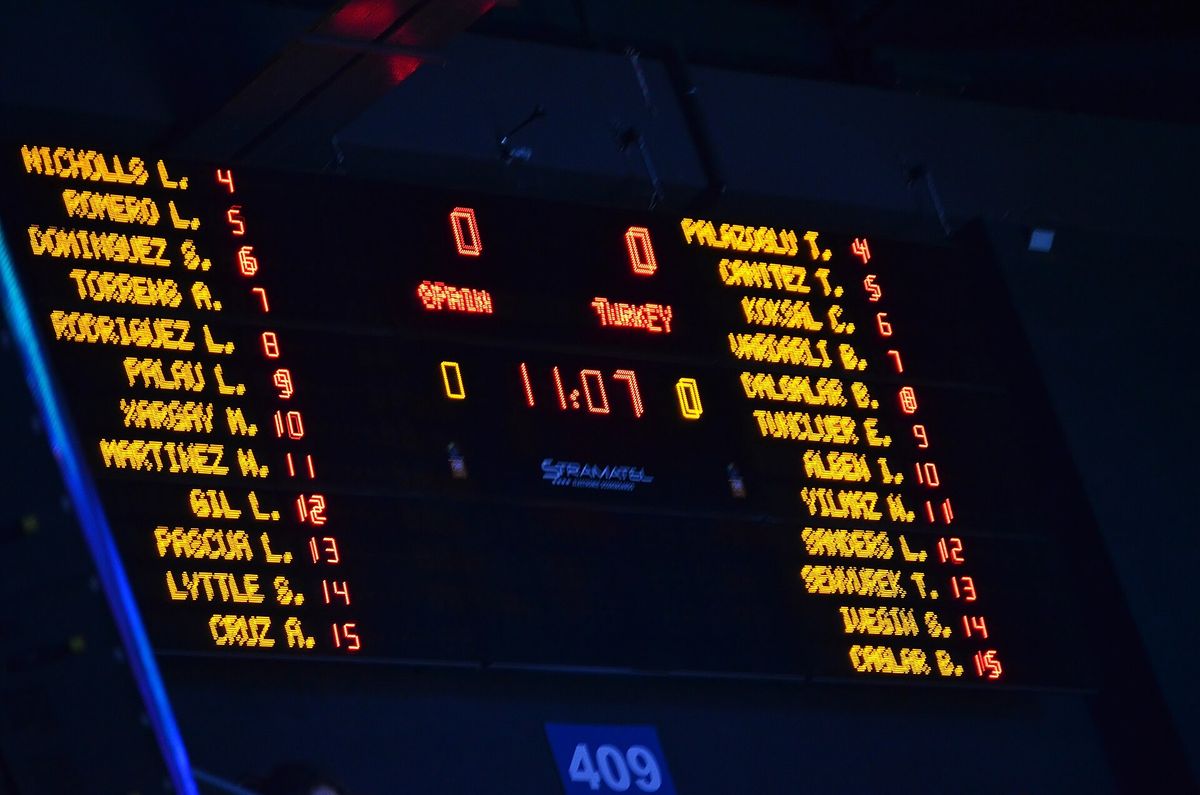
Every four years a wave of articles explains that FIBA games are shorter and the three-point line is closer, and then stops. Those two facts are true and nearly useless on their own. What a reader actually wants to know is which differences change a decision — and there are four of them, plus one that quietly changes how an entire defence is built.
The table, with the consequence in the last column
| Item | NBA | FIBA | What it changes |
|---|---|---|---|
| Game length | 48 minutes, 12-minute quarters | 40 minutes, 10-minute quarters | Eight fewer minutes compresses a comeback: a deficit that is two quarters' work in the NBA is nearly three in FIBA |
| Personal fouls to disqualification | Six | Five | A big man's foul budget shrinks by twenty per cent; hack-the-centre tactics arrive earlier |
| Three-point arc | 23 ft 9 in (7.24 m) at the top, 22 ft in the corners | 6.75 m at the top, 6.60 m in the corners | The corner premium nearly disappears, and so does a chunk of NBA spacing theory |
| Jump-ball situations | Jump ball every time | Alternating possession arrow | A held ball late in a close game is a lottery in one game and a known outcome in the other |
| Defensive three seconds | Violation | No such rule | A FIBA centre may sit in the lane all night; the NBA's whole drive-and-kick geometry assumes he cannot |
The one that is not on most lists
The absence of a defensive three-second rule in FIBA is the single biggest structural difference on the floor, and it is usually buried under the arc measurements. In the NBA a defender who is not actively guarding someone cannot remain in the lane for more than three seconds. Remove that rule and a team may park its best interior defender at the rim permanently. Driving lanes close, help defence stops being a rotation and starts being a standing arrangement, and an offence built on penetrating and kicking to the corner finds the corner shot worth less and the drive harder.
That is why a player who looks like a different player in an international summer is often not playing worse. He is playing against a defence that his own league's rulebook makes illegal.
Fouls: the category that does not translate
FIBA does not have flagrant fouls. It has unsportsmanlike fouls, which cover severe or non-basketball contact and carry their own escalation — a second one removes the player. A broadcaster describing a FIBA unsportsmanlike foul as “a flagrant one” is giving a useful approximation and an inaccurate name, and viewers who then look up the penalty in the wrong rulebook get the wrong answer about what happens next.
What stays the same
Worth saying, because the differences list creates the impression of two sports. The court is within a few inches of the same size, the basket is the same height, the shot clock is 24 seconds in both, and the reset after an offensive rebound is 14 in both. Travelling, the shape of the pick-and-roll and the economics of the free throw are shared. The two codes differ at the edges, and the edges are where close games are decided.
How to settle an argument about this
- Name the competition first. “International rules” is not a code; FIBA is. College basketball in the United States is a third rulebook again, and most cross-code arguments are actually two people quoting different books.
- Go to the rule number, not the summary. Both bodies publish their rulebooks. A summary that cannot be traced to a numbered article is a summary of a summary.
- Check the year. Both codes amend regularly — the NBA announces changes before each season, and FIBA revises on its own cycle.
How the same play can produce a different line in the box score is the subject of our piece on assists; the NBA's own mechanism for correcting a call in real time is in the coach's challenge piece. The donor material on this desk is the essay on strategic thinking. Desk index: Rules & Strategy; full index: the archive.
What we read
Every figure above comes from one of these documents. If a number is not in them, it is not in this piece.