

Rules & Strategy678 words
What counts as an assist, and who decides
Points are counted. Assists are judged. Once you know who is doing the judging, a whole genre of statistical argument stops being about basketball.
What is in this piece — 6 sections
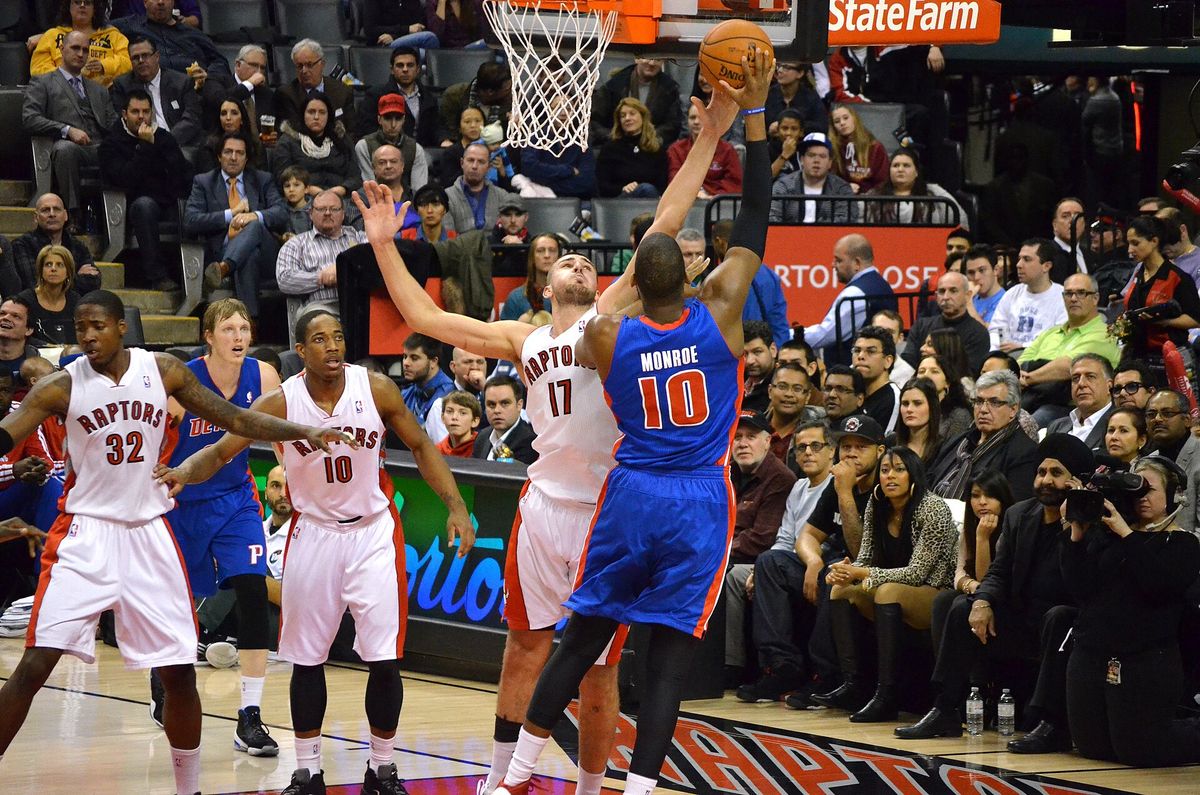
A made shot is an event. Either the ball went in or it did not, and no reasonable person disagrees. An assist is an opinion, written into the official record by a named human being sitting at the scorer's table, and the rulebook says so out loud.
The NBA definition, and the words that do the work
In the NBA an assist is a pass that leads directly to a basket — awarded, in the language that matters, in the judgment of the statistician. Everything contentious lives in “directly” and in “judgment”. A post entry followed by three dribbles and a turnaround; a handoff; a pass to a shooter who takes one step to his left before shooting: these are not decided by a measurement. They are decided by a person.
Where FIBA is stricter
Two differences are worth knowing, because they explain box scores that look wrong when the same player is covered by both codes.
- Continuity. FIBA practice does not credit an assist where the scorer has to beat his defender after catching the ball. The NBA is more generous with exactly that play.
- Shooting fouls. A pass that leads to a shooting foul, with the points coming from the free-throw line, is not an assist in the NBA. In FIBA play it can be.
So one pass, one play, two correct and different box scores. Neither book is wrong; they are answering slightly different questions about what a pass accomplished.
The measurable consequence of human judgement
Because the award is discretionary, it varies by scorer — and the variation is large enough to show up in research. Studies comparing arenas have found differences on the order of several assists per game between the most and least generous scorers, with one comparison putting two particular arenas nearly ten assists apart on average. That is not a rounding error. It is bigger than the gap between a good passing team and a great one.
Blocks sit in the same category of discretion, which is why the two statistics behave oddly in the same ways. Points, rebounds, free throws and fouls are far less exposed, because they are tied to observable events rather than to a judgement about causation.
What this means for an argument you have probably had
“Player A averages 1.4 more assists than Player B” is a weaker claim than it looks if the two played most of their games in different buildings. The fix is not to discard assists — they still describe something real — but to stop treating a small difference as a fact about the players rather than a fact about the record. The careful version of the claim adds where the games were played, and the careless version does not survive it.
It also means the historical comparisons need the same caution as the ones we set out in what the box score never recorded: the assist definition itself has moved over the decades, and a 1960s assist and a 2026 assist are not quite the same object.
How to check any assist claim
- Which code? NBA, FIBA and college all define it differently.
- Is the difference bigger than the scorer effect? If two players are within a fraction of an assist per game, the record is not precise enough to separate them.
- Does the source quote the rulebook or a summary? The rulebook's own phrase — in the judgment of the statistician — is the one to quote, because it tells the reader what kind of number they are holding.
The rest of the cross-code differences are in NBA against FIBA, and what the league can correct after the fact is in the coach's challenge piece. A scoring table that leaves nothing to judgement at all — every result a fixed number, printed in the laws — is the card table, and the arithmetic behind its most quoted figure is in why a vulnerable game pays five hundred. Desk index: Rules & Strategy; full index: the archive.
What we read
Every figure above comes from one of these documents. If a number is not in them, it is not in this piece.